
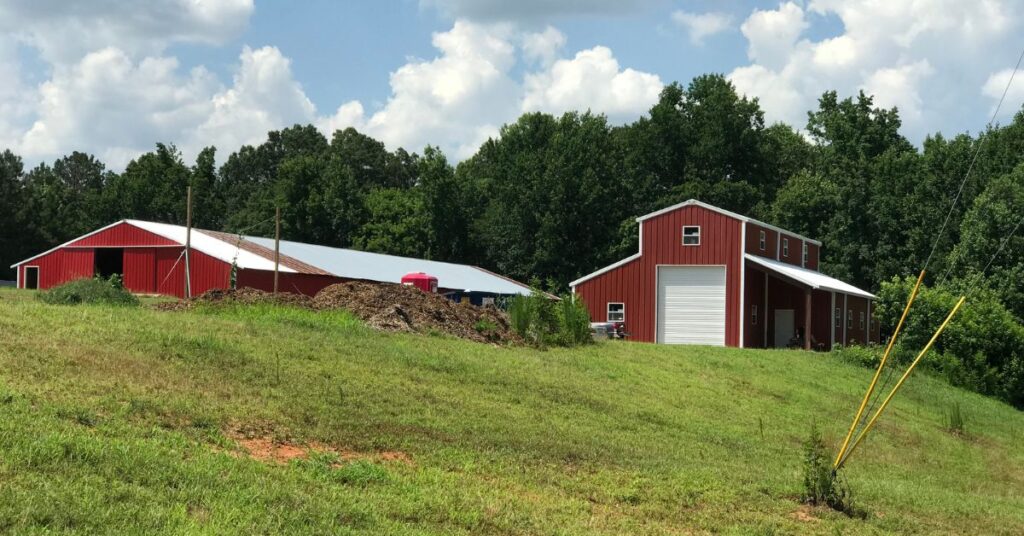
If you’re planning a new building for your property, the metal vs. wood question is probably one of the first things on your mind. Both materials have long histories in agricultural construction, and wood especially has earned its reputation over generations of use. But we’re not building barns in 1950 anymore. The technology behind steel construction has advanced to the point where metal agricultural buildings are more durable, more affordable, and more versatile than most people realize. Wood still has its place, but when you stack the two materials up, metal comes out ahead in almost every category that matters on a working farm or ranch. To learn more about why it’s best, read on for a detailed comparison of metal and wood agricultural buildings.
Wood’s Role in Agricultural History
Wood was the default building material for a long time. It’s a natural, widely available resource, and before modern steel fabrication existed, it was simply the best option available. People knew how to work with wood, it was easy to source, and skilled carpenters could frame out custom layouts for stalls, lofts, and storage areas without a lot of engineering overhead.
Wood also has structural warmth and workability that some property owners still prefer. In dry climates, a well-built wood structure can hold up reasonably well for decades. If you’re on a tight upfront budget and working on a smaller project, wood framing can still get the job done.
Where Wood Falls Short
The problems with wood start showing up fast in agricultural environments, which tend to be exactly the kind of conditions that accelerate the material’s natural weaknesses.
It Can Rot
Moisture is the biggest factor. Barns and agricultural buildings deal with animal excretion, wet feed, irrigation, and weather exposure constantly. Wood absorbs moisture from these activities, and once that process starts, rot, mold, and structural softening follow.
It Feeds Insects
Insects are another persistent problem. Termites and carpenter ants treat wood structures as a food source and a home. Pest damage can compromise structural integrity, and by the time it’s visible, the repair costs are already serious.
It’s a Pain To Maintain
If you want wood to last, you have to maintain it religiously. Add in the regular cycle of painting, sealing, and board replacement, and the maintenance burden on a working farm becomes a frustrating drain on time and money.
Why Metal Is the Superior Choice Today
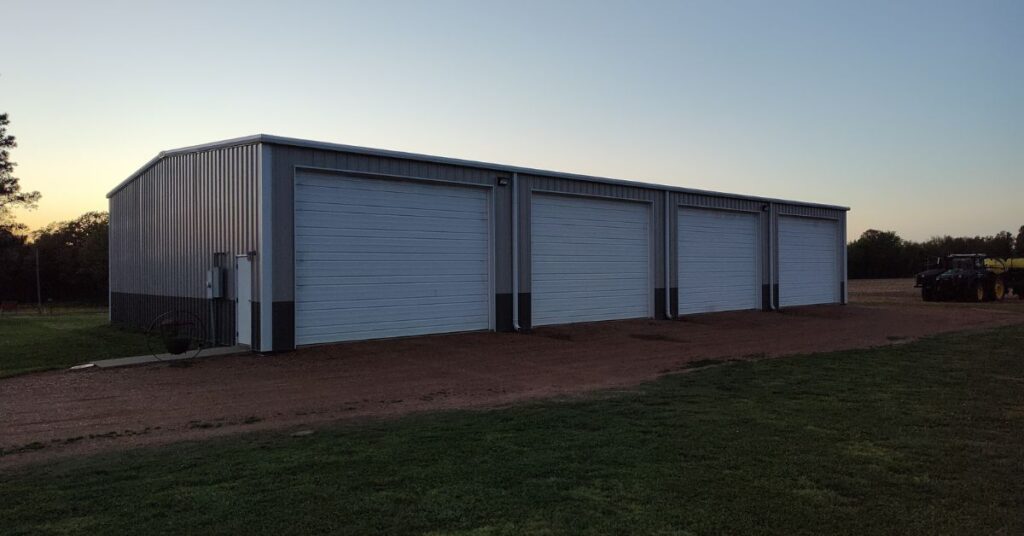
Steel changed what’s possible in agricultural construction. A properly engineered metal agricultural building resists moisture, won’t rot, won’t warp, and gives insects nothing to work with. Moreover, the material is noncombustible, which is something wood can’t offer at all. Fire risk is one of the most serious threats to a farm operation, and steel addresses it.
Beyond safety, steel simply holds up longer. A quality metal building can last 40 to 60 years or more with minimal maintenance. You can put it up quickly and use it reliably without constantly managing its deterioration.
Durability Under Agricultural Conditions
Durability is the number one priority in an agricultural building, and this is where the gap between metal and wood is the widest. Farms and ranches don’t operate in controlled environments. They deal with heavy snow loads, high winds, hard freezes, intense heat, and everything in between depending on the region.
Steel buildings are engineered to high load ratings. Wood construction requires more careful engineering to hit the same performance thresholds, and even then, those thresholds gradually diminish as the material degrades. A steel building’s structural performance doesn’t erode the way wood’s does. What it’s rated for on day one is essentially what it’s rated for 30 years later.
Cost: Upfront vs. Over Time
Wood often costs less upfront, and that’s a persuasive consideration for operations managing tight budgets. But the total cost of ownership tells a different story. Maintenance, repairs, pest treatment, repainting, and eventual structural replacement all stack up over the life of a wood building. When you average those costs across 20 or 30 years, wood stops being the economical choice.
Metal can have a higher starting price in many cases, but the ongoing cost is dramatically lower. There’s no repainting schedule, no rot to address, and no pest damage to remediate. The investment is front-loaded, and then it largely holds its value without demanding more from you.
Structural Versatility
One of the reasons people historically leaned toward wood was flexibility. Carpenters can work around unusual site conditions, adjust mid-build, and customize layouts in ways that felt harder to achieve with metal. That advantage has essentially disappeared with modern steel fabrication.
Today’s metal buildings come in a wide range of configurations, roof styles, and interior layouts. You can engineer custom stall arrangements, wide open equipment bays, hay lofts, and multi-use spaces without sacrificing the structural benefits of steel.
Construction Speed and Simplicity
Metal buildings go up faster. The vast majority of metal structures are pre-engineered, which means their steel components arrive onsite ready to assemble. This cuts labor hours and reduces exposure to weather delays during construction. If you’re racing against a season, preparing for incoming livestock, or just need the building operational quickly, the faster build timeline of metal is an unbeatable advantage.
Conversely, wood construction involves more onsite staging, cutting, and labor-intensive framing that extends the project window. It’s not a dealbreaker for every situation, but when time is a factor, metal has a clear edge.
The Verdict
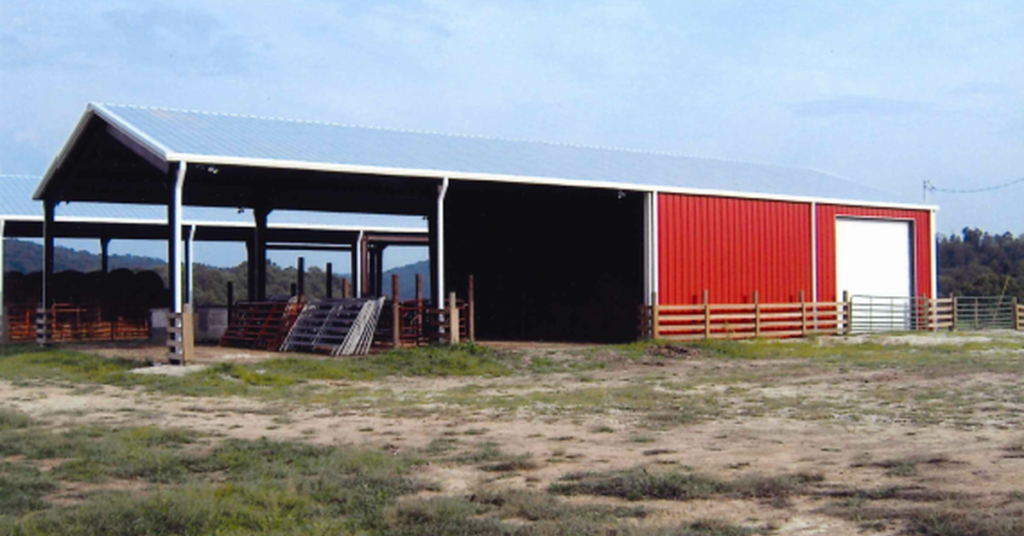
Wood served agriculture well for a long time, and in the right context, it can still be a workable option. But if you’re comparing metal and wood agricultural buildings in today’s context, then the former is best. Steel lasts longer, requires less maintenance, handles harsh conditions better, resists fire and pests, and delivers more usable interior space. The technology that exists today can facilitate a steel agricultural structure that’s custom to your needs, built to last decades, and compatible with a realistic budget.
If you’re ready to build something that holds up for the long haul, turn to Arco Building Systems. We can help you design and fabricate metal barn kits and other agricultural steel buildings. We’ve been in business since 1979, and we have a proven track record of providing the highest-quality pre-engineered structures. Whether you need a livestock barn, riding arena, horse barn, or equipment storage building, contact us to custom-design a structure that won’t let you down.