
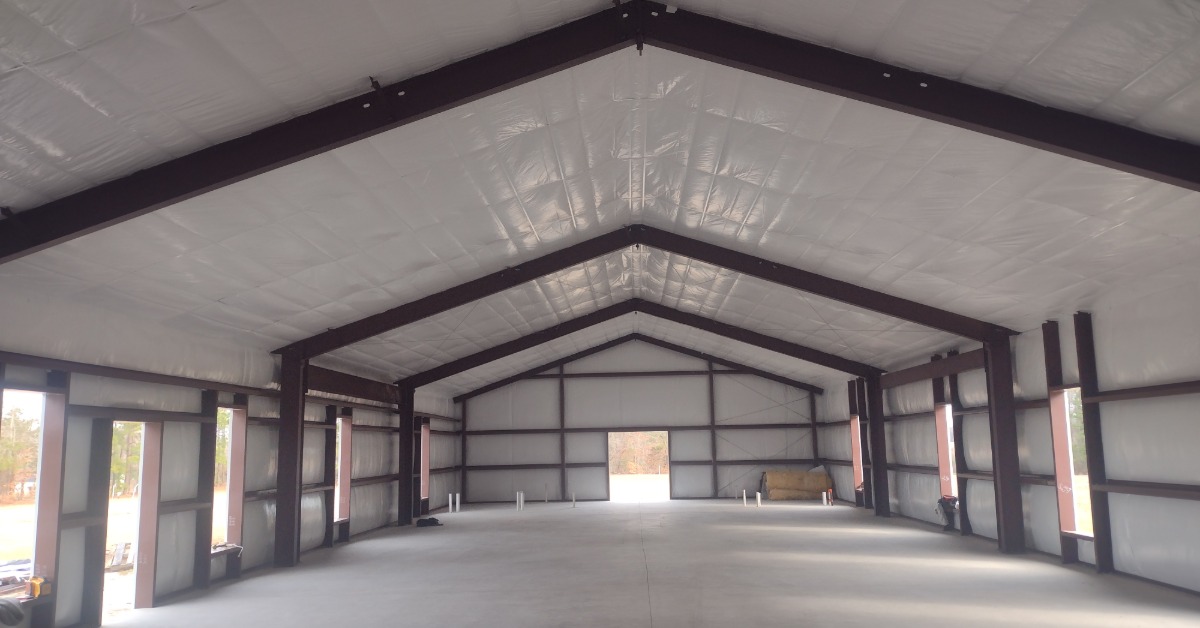
You’ve invested in a steel building, but now you’re staring at those bare metal walls, wondering how you’re going to stop heat transfer from ruining the indoor climate. Steel is a conductor, which means your metal building will see temperature extremes if you don’t insulate.
However, many people grab whatever insulation they see at the home improvement store without considering how metal buildings behave differently than wood-framed structures. You need a strategy that accounts for condensation, thermal bridging, and the unique challenges that come with metal construction.
Below, we walk through everything you need to know to choose the right insulation for your steel building.
Why Steel Buildings Have Unique Needs
Metal transfers heat approximately 400 times faster than wood. Therefore, your steel framing is practically a thermal highway. Heat easily passes through, which means it will escape your building’s interior when it’s cold outside and bake it when it’s hot outside.
Condensation is another huge climate concern with metal structures. When warm, moist air hits cold metal (whether from the interior or exterior), water droplets are almost bound to form. Unaddressed, this moisture leads to rust that compromises your building’s integrity.
The Importance of R-Value
R-value measures thermal resistance, and it’s the number one factor to consider when choosing insulation. Every type of insulation has an R-value, and higher numbers mean better efficiency.
Higher is always better, but keep in mind that your building might receive sufficient insulation from a lower-value material because your climate isn’t as extreme. Another thing to keep in mind is installed R-value versus rated R-value. You can buy the most efficient insulation in the world, but if you install it with gaps and other poor techniques, you can cut its actual performance in half. Every seam that isn’t properly sealed becomes a weak point for thermal energy to pass through freely.
The Need for a Vapor Barrier
Every insulated steel building needs a vapor barrier on the warm side—the interior in cold climates, the exterior in consistently hot, humid climates. This barrier stops moisture-laden air from reaching the cold metal where it would condense.
Some insulation includes vinyl facing, which acts as an integrated vapor barrier. If the insulation you choose doesn’t have a vapor barrier already, then you’ll have to install it separately.
Now, if your building is in a highly variable climate, then you might want to consider a smart vapor retarder, which adjusts its permeability based on humidity levels. You might also use a low-perm material that allows some drying in both directions. But a true vapor barrier is risky in variable climates because it’s one-directional. When vapor drive flips seasonally, it can prevent the assembly from drying to that side.
The Best Insulation Type: Fiberglass Batt
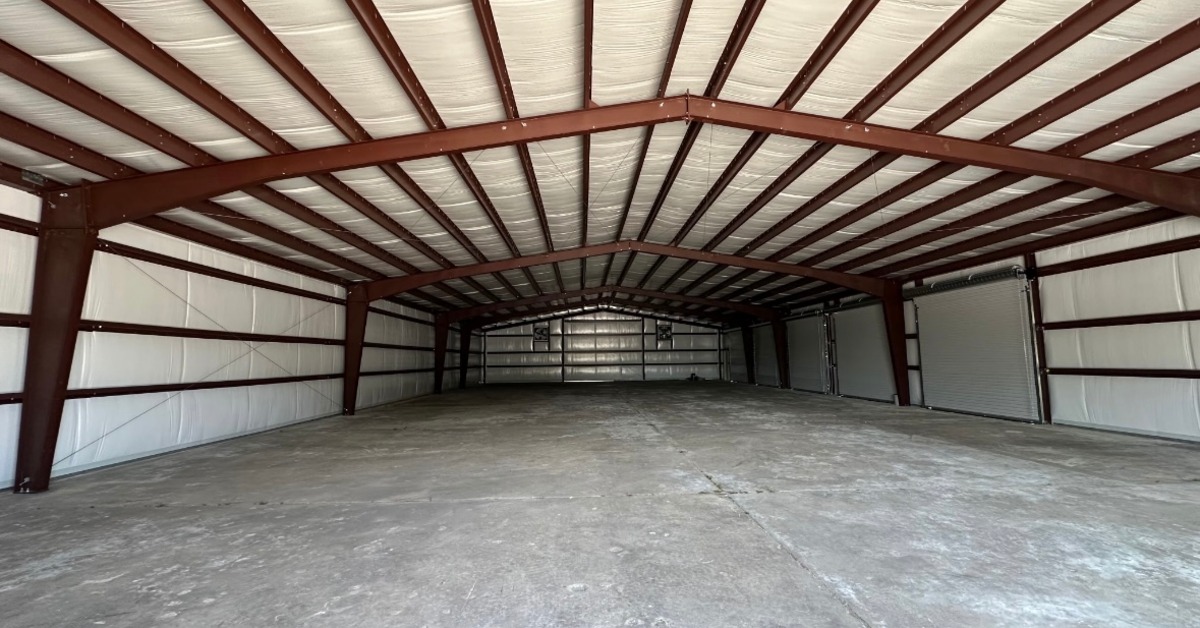
Fiberglass batt is one of the most popular and effective insulation types for steel buildings.
What It Is
Fiberglass batt insulation is a pre-cut, flexible insulation made from spun glass fibers. It comes in rolls and is installed in the roof and wall cavities between your building’s purlins and girts. Oftentimes, it features a built-in facing or liner to help improve energy efficiency and manage moisture.
Types of High R-Value Fiberglass Batt Systems
Fiberglass batt comes in many types, but these are some of the best in terms of R-value: long tab banded, sag and bag, and EnergyCraft.
Long Tab Banded (LTB) System
The LTB system starts with faced fiberglass batts that feature extended flanges—much longer than standard tabs. These elongated tabs wrap around the framing members and connect to metal banding or straps that run perpendicular to the framing, creating a support network that holds the insulation in position.
As a result, the batts maintain their full loft between framing members instead of compressing or sagging over time. By keeping the insulation fluffy and properly positioned, the LTB system delivers consistently higher R-values than basic single-layer installations.
Sag and Bag (Sag-N-Bag) System
The sag and bag system lives up to its descriptive name. The first layer of faced fiberglass is intentionally allowed to drape—or sag—in gentle curves between purlins or girts. This controlled sagging keeps the insulation at full thickness in the cavity space, rather than compressed against the framing.
Next comes the bag portion: a second layer of unfaced fiberglass that is added either over the structural members or nested within the framing depth. The double layers boost total R-value while strategically minimizing compression at thermal bridging points.
EnergyCraft Liner System
The EnergyCraft system integrates a continuous interior liner fabric into the insulation assembly. Rather than exposed fiberglass or basic facing, you get a uniform interior surface that looks clean and finished.
Behind this liner sits the fiberglass insulation, held in place by specialized strapping or retainers designed to maintain the target R-value without compression. When properly installed and sealed, the liner does double duty: It acts as both an air barrier and vapor control layer.
Important Installation Tip
As you may have picked up on by now, you typically want to avoid compression with fiberglass.Match your insulation thickness to your framing depth, and avoid compressing it to make it fit. This task is easiest when you choose one of the highly effective batt options we mentioned above.
What About Spray Foam?
Spray foam seems to be all the rage in insulation these days, so why haven’t we mentioned it as an option for your steel building? Well, many metal building manufacturers will void your warranty if you use it.
For one, spray foam can hamper the natural expansion and contraction that metal needs to handle temperature changes. This restriction creates stress points that can damage your building.
But more significantly, spray foam traps moisture against metal. Steel buildings need to breathe a little, and spray foam eliminates that breathing space. The trapped moisture accelerates rust and corrosion, which is exactly what you’re trying to prevent. Stick with other methods that work with your building’s design rather than against it.
Final Selection Thoughts
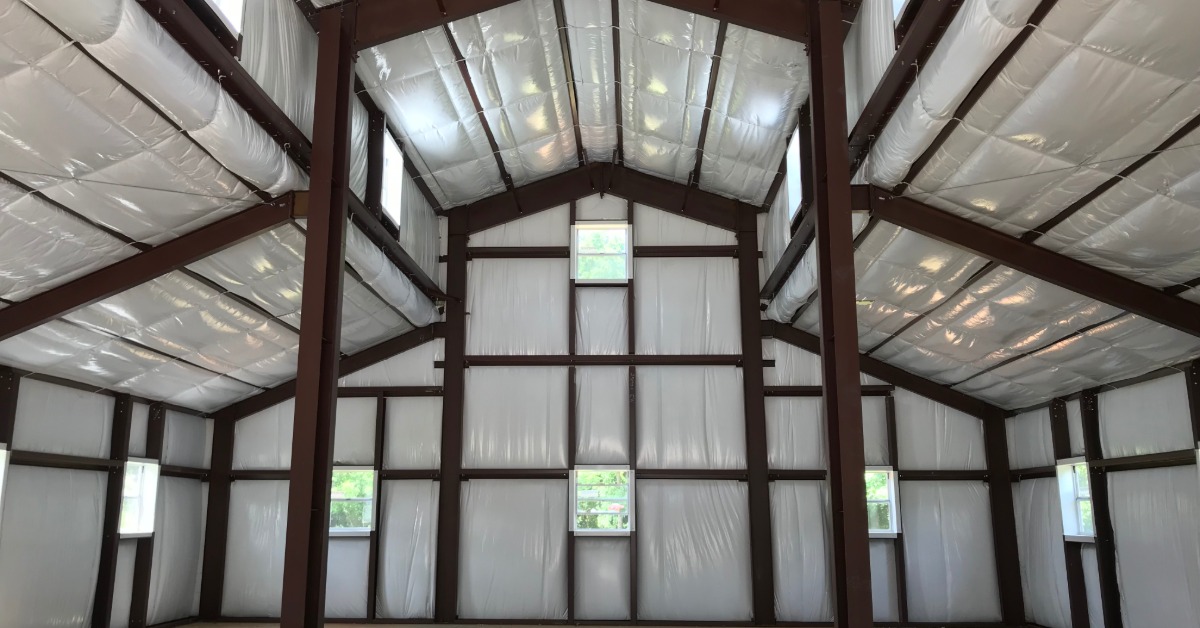
In the end, the easiest way to choose the right insulation for your steel building is to partner with a metal building supplier that also offers compatible insulation systems. This takes the guesswork out of the equation and guarantees you receive an insulation type that will support your warranty.
If you work with Arco, we can include fiberglass batt insulation in your pre-engineered metal building kit. We can also accommodate you if you don’t want the insulation we provide. Simply let us know what insulation you plan on using, and we will design your steel building to support it with the correct length screws, purlin/girt depths, and so forth. Whichever you choose, our goal is to provide you with a high-quality steel structure that is as comfortable and regulated as it is durable. Inquire today.